


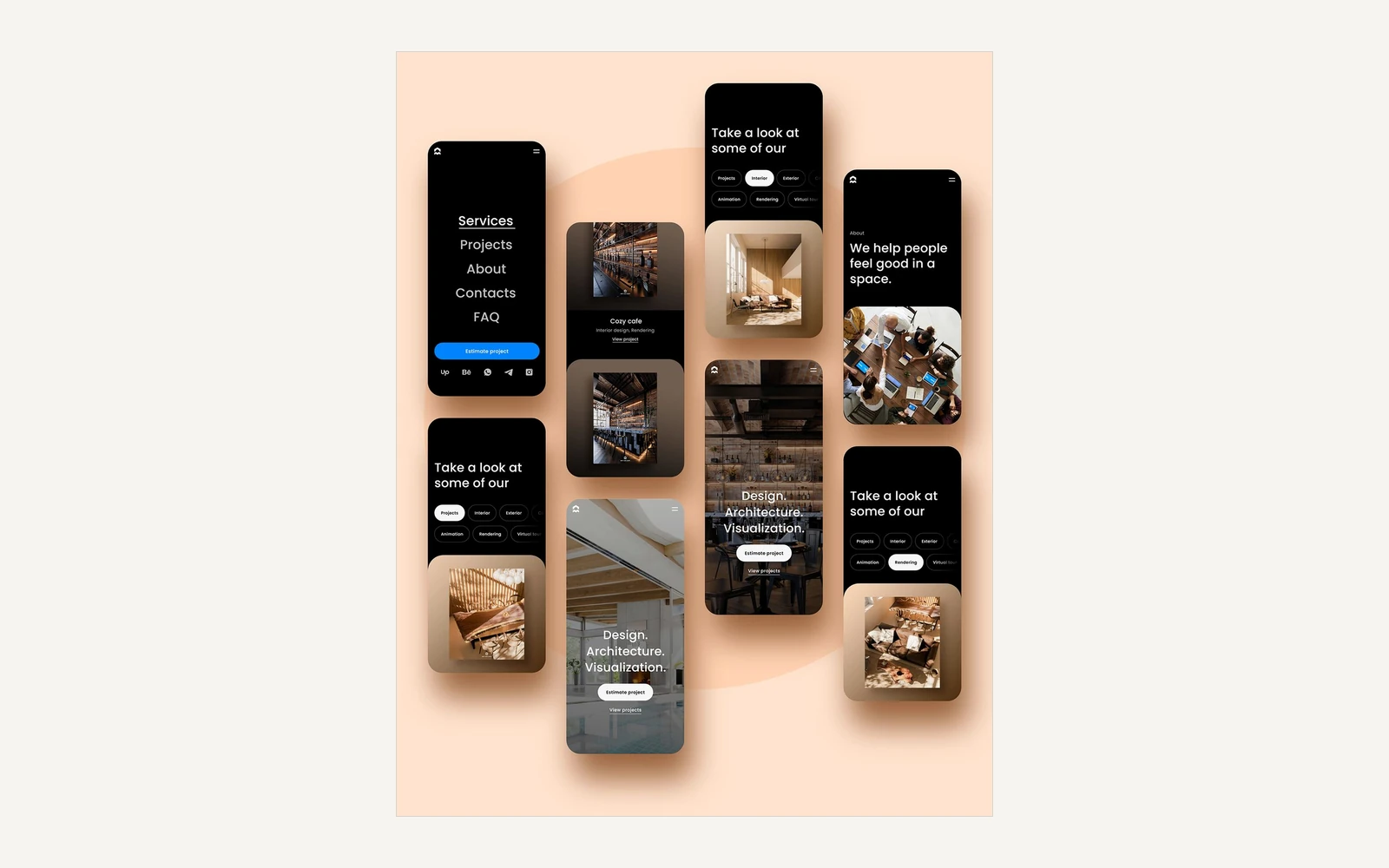
Mobile-first does not mean ignoring desktop. It means starting with the tightest constraints: small screens, variable connections, limited attention and touch interaction, then enhancing the experience on larger screens.
Prioritise what matters
On mobile, users see only a small part of the page at once. The core message, price, action, contact or information they need must appear at the right time.
Good mobile design reduces detours and avoids making a simple task feel difficult.
Design for touch
Buttons need comfortable tap targets, form fields must remain readable, navigation should be simple and interactive elements need enough spacing.
Hover-only interactions should always have a clear touch alternative.
Optimise speed and media
Phones are often used on slower or unstable connections. Oversized images, unnecessary scripts and layout shifts quickly damage the experience.
Responsive images, modern formats, lazy loading and controlled CSS/JS help keep pages fast.
Test real journeys
Do not only shrink the browser window. Test the actual tasks: contact, buy, add to basket, open navigation, switch language, complete a form and use the back button.
CALYNEVO designs and checks both mobile and desktop so each format is clear without forcing them to look identical.
Illustrative example
On a phone, a visitor wants to check a service and contact the business. A clear heading, concise copy and a well-placed button may help more than a complex effect. Also test the menu, the on-screen keyboard and error messages. Desktop simulation supports these checks but does not replace them.
Your practical checklist
- Read without zooming or horizontal scrolling.
- Test every action without hover.
- Complete a form using the phone keyboard.
- Check images and layout stability while loading.
Related reading
Already have a website: what should you improve first?Need support?
Improve my mobile experience.
Explain your goal, your current situation and what is holding you back. You do not need a technical specification to start: the first step is to identify useful priorities and agree a clear scope.